Comet Crashing Jupiter B July 1994
Battle tank (video game). Super Battle City 2, a free online Action game brought to you by Armor Games. Defend your military base and defeat all of your enemies! Purchase upgrades to improve your tank’s weapons and equipment! Super Battle City, a free online Action game brought to you by Armor Games. Almost everyone of us remembers the legendary Battle City game which made a real splash in the world of console games industry. Today we have a nice opportunity to enjoy its new version in da flash! Destroy enemies, capture turrets and, of course, earn money to upgrade your tank! NES Battle City is very Classical Tank battle game. Super Tank Battle is a modern style NES / FC Battle City with new attractive elements. This is the game of modern war, please boom the map, summon your alliance, and strike the Enemy! Prepare the tank battle, prepare the tank modern war! On Console Tank Battle is very Classical game. Super Tank Battle is a modern style Tank Battle Game with new attractive elements and 500 build-in maps, you no longer need to play on Emulator anymore. This is the game of modern war, please boom the map, summon your alliance, and strike the Enemy! Prepare the tank battle, prepare the tank modern city war! There are 5 different.
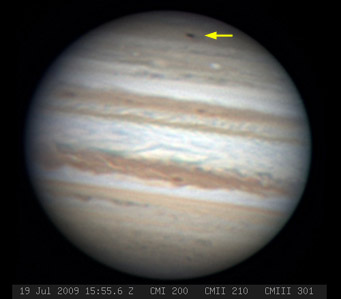
Jupiter Jupiter w/ comet crash spotsThis is a photo of Jupiter taken on 21 July 1994 (at about10:00pm EDT), during the midst of the Shoemaker-Levy impacts.This photo was taken through a Celestron CG-11 using eyepieceprojection (a 10mm Celestron Plossl eyepiece was used, yielding280x). An Orion Skyglow filter was in the optical path. Thefilm was TMAX 400 and the 'hat trick' exposure method was used.Exposure is very approximately 1 second. This photo clearlyshows one major spot due to a comet fragment impact, and thedarkening of the limb (at about 7:30 o'clock) is from anotherimpact site rotating into view. The original image is muchclearer than this JPEG digital version. I had a 2.4 inch Tascorefractor (at 70x) also looking at Jupiter during the comet crashevents. The spots on Jupiter due to the comet impact wereclearly visible even with this modest instrument.
Thisphoto of Jupiter is from the first roll of film I ever took ofthe planet through a telescope.' Back' links, e-mail and CopyrightThis page is part ofImages and HTML text © Copyright 1997 by Joe Roberts.
From the 'JPL Universe'Eugene Merle (Gene) Shoemaker (April 28, 1928 – July 18, 1997) was an American geologist and one of the founders of the field of planetary science. He co-discovered Comet Shoemaker–Levy 9 with his wife Carolyn S. Shoemaker and David H. This comet hit Jupiter in July 1994: the impact was.
 January 13, 1995
Galileo began 1994 (as it would end the year) with the spacecraft on the far side of the sun from Earth. At that distance the communication rate was at its lowest, and the plan was to wait a few weeks till declining distance increased the rate before playing back most of the pictures of asteroid Ida, target of Galileo's second asteroid flyby in August 1993. Dungeon browser game.
And then in the first image processed--a group of narrow horizontal strips of picture called 'jail bars'--Ann Harch of the imaging team spotted something next to the asteroid.
The rest of the picture, as well as matching infrared scans, confirmed that the spacecraft had photographed the first known moon of an asteroid, a one-mile orbiting rock later named Dactyl.
Before the scientists had finished telling reporters and the public of Galileo's discovery, the team began to design the spacecraft's program to observe 1994's biggest event in the solar system: The newly discovered, shattered comet named Shoemaker-Levy 9 was going to hit the far side of Jupiter in July.
Only Galileo could view the far side of Jupiter, though most of Earth's observatories would be looking hard, and, as it turned out, seeing most of the show except the opening moments.
Because this was an addition to Galileo's already busy schedule, the scientists, engineers and programmers had little time and no extra resources to set up and carry out what would be the spacecraft's sixth encounter on the way to Jupiter. They knew that the schedule of the 20 expected events would be uncertain to 10 minutes or more, and that the spacecraft would have to transmit its observations at its lowest rate, 10 bits per second--the one that had seemed too slow for asteroid pictures a few months before.
They programmed Galileo to observe about half the impact events, using various combinations of its remote sensors, and to tape-record most of the data, especially images and infrared spectra (showing temperature and gas composition), for much later playback, lasting into early 1995.
When the events came, in the third week of July, they were much more prominent than expected, and Hubble Space Telescope and ground-based observers had a field day. Galileo's photopolarimeter radiometer returned brightness histories of three of the impacts within about a day of the arrivals, and the first actual time-lapse pictures of a comet fragment arriving (it was the last one) came out in August.
By October, three Galileo instrument teams could get together and give the scientific community a brief but coherent history of one impact, in ultraviolet, visible and infrared light: For a moment, they said, the fireball was hotter than the surface of the sun.
The tape playback continued in December and into January, but already the Galileo team had turned back to its main job--getting ready for December 1995, when Galileo's probe plunges into Jupiter's clouds, and the Galileo orbiter begins its long-term mission around Jupiter.
Comet Shoemaker-Levy Home Page